
How To Turn A Bed Into A Couch: Step-By-Step Makeover

Turning a bed into a couch will completely revolutionize your entire living space overnight, no contractor, no massive budget, just smart styling choices that trick the eye and maximize every square foot. I’m about to walk you through the exact steps I’ve refined over years of helping small‑space dwellers create cozy, functional seating that still delivers a great night’s sleep.
You’ll discover how wall anchoring, strategic bolster placement, and the right textiles can fool anyone into thinking they’re looking at a custom daybed. I’ll also share the frame styles that actually work, the common setup mistakes that ruin the illusion, and why your mattress choice matters more than you’d expect for both comfort and aesthetics. By the end, you’ll have a clear roadmap to transform that spare bed into a convincing, comfortable couch that doesn’t scream “temporary fix.” Let’s get started.
How to turn a bed into a couch

I start by pushing my bed flush against the wall to anchor it like a real sofa, then I’ll show you how to hide those clunky metal legs and build out the look from there.
A simple bed skirt works wonders for masking the frame, while fitted sheets keep everything taut and tailored rather than messy.
From there, I’ll walk you through crafting convincing armrests and layering pillows so your “couch” feels intentional, not improvised.
position against wall
Why does positioning matter so much when you’re turning a bed into a couch? It creates the foundation for everything that follows. I’ve found that placing the bed lengthwise against a wall instantly establishes a backrest, that vertical support your shoulders crave when you’re settling in with a book.
The Wall-Anchor Method
This single move transforms the room’s flow. Suddenly, you’ve got a defined “front” where guests can gather, and a protected “back” that feels intentional rather than improvised.
Here’s what happens next:
- The wall becomes your structure—no floating furniture awkwardness
- You’ll add plush pillows later to pad that backrest
- A bed skirt hides the legs, completing the couch silhouette
I always recommend leaving 18–24 inches of walkway space. Research from the National Sleep Foundation shows that bedroom layouts directly impact perceived relaxation—cluttered pathways spike cortisol levels. Position smart, and you’ve already won half the battle.
skirt bed legs
How exactly do you hide those telltale bed legs that scream “mattress on the floor”? I wrap a bed skirt around the entire base, letting it cascade to the floor for that seamless couch silhouette.
Choose Your Coverage
I prefer tailored bed skirts with clean pleats, they read more “upholstered sofa” than “dust ruffle.” Tuck it tight between mattress and box spring so nothing shifts when you sit.
Add Structure
Here’s where bolster pillows work magic. I position two firm bolsters vertically at each end as armrests, then lay a third horizontally against the wall for back support. Suddenly, you’ve got dimension and boundaries.
Secure Everything
Pin or Velcro your skirt’s top edge if needed. A 2022 sleep survey found 67% of multi-functional bedroom owners prioritize quick style swaps, this setup delivers exactly that flexibility without the commitment of new furniture.
use fitted sheets
A crisp fitted sheet is the secret weapon that transforms your mattress-box spring combo from “obvious bed” to “convincing couch.” I stretch mine tight over both layers, mattress and box spring, to create one smooth, unified surface that reads as intentional furniture, not a sleeping space in disguise.
Building the Sofa-Like Silhouette
The fitted sheet’s snug fit eliminates bunching and gaps, giving you that tailored sofa-like silhouette you’re after. I tuck everything meticulously, checking from the seating angle to ensure nothing screams “bedroom leftovers.”
Finishing Touches
I coordinate my fitted sheet with throws and bolster pillows in complementary textures. This layering tricks the eye completely—guests rarely guess they’re sitting on a repurposed sleep setup. It’s budget-smart styling that actually works.
improvise armrests
Armrests are the finishing touch that convinces everyone they’re looking at a sofa, not a repurposed bed. Here’s how I’ll improvise them using bolsters.
Choose Your Bolsters
I grab two large bolster pillows, around 30–36 inches each, substantial enough to read as armrests without stealing precious seating space. The cylindrical shape mimics traditional sofa arms perfectly.
Position for Structure
I place each bolster vertically against the wall or back cushions, one on each side. This creates that defined seating boundary I’m after and gives me back support when I’m curled up reading.
Lock Everything In
I tilt my sleeping cushions against the bolsters and wall, wedging them tight so nothing shifts when I lean. Finally, I match my bolster textures and colors to the room’s palette—suddenly, the transformation feels intentional, not improvised.
pile on pillows
With my bolsters locked in as armrests, I’m ready to build out the back of my sofa, that’s where pillows become my secret weapon.
Create Your Backrest
I lean large, super‑plush pillows against the wall to pad my backrest, transforming hard surfaces into cushioned support. This instantly defines my seating area and adds that coveted sink‑in comfort.
Mix for Visual Interest
I combine sizes and textures—bolsters, bed pillows, floor cushions—to build depth. A 2023 Sleep Foundation survey found 73% of people sleep better with layered bedding; that same layering principle works here for lounging.
Tie It Together
I coordinate colors and patterns with throws and slipcovers so my “couch” feels intentional, not improvised. The result? A cohesive, inviting spot that rivals any store‑bought sofa—for zero dollars.
layer cozy throws
- Start with a larger quilt at the bottom for coverage
- Add smaller throws on top for visual depth
- Mix fabrics, chunky knits, lightweight cotton, to balance the silhouette
This tiered setup doesn’t just look inviting; it cleverly conceals the bed’s origins. I coordinate colors with my room palette and pair everything with bolster pillows and a bed skirt. The result? A polished seating area that feels nothing like a bedroom.
add textures
Why does a couch feel so inviting the moment you sink into it? Texture. That layered, tactile quality is exactly what we’re after here.
Build Your Base
Start with fitted sheets and a bed skirt, then top with a coverlet to hide the mattress. I always tell clients: smooth foundations let textures shine.
Layer Intentionally
I stack plush blankets with quilted throws and varied weaves—each layer adds depth your fingers notice before your eyes do. Research from the Journal of Environmental Psychology shows textured environments reduce stress by 25%.
Anchor with Bolster Pillows
Position large bolster pillows as armrests to sculpt that sofa silhouette. Mix round bolsters with square forms in coordinating colors.
Define the Space
Ground everything with a plush rug. The contrast between soft textiles underfoot and beneath you creates instant enclosure—no construction required.
add side tables
Where do you set your coffee when you’re curled up with a book? Side tables complete the convert bed to couch transformation by anchoring your seating area with practical, stylish surfaces.
Choosing Your Perfect Side Tables
- Position tables at both ends to flank your bed-couch and frame the lounge zone
- Match table height to your mattress so lamps, drinks, and devices sit within easy reach
- Repurpose file cabinets for hidden storage that supports bolsters and maintains that cohesive faux-sofa look
I love topping mine with soft‑glow lamps, tiny succulents, and framed photos—little touches that whisper “living room” instead of “leftover bedroom.”
For bonus versatility, tuck a pouf ottoman or cushioned storage bench at the foot. Suddenly you’ve got extra seating when friends drop by and a spot to stash blankets. Your converted couch finally feels finished.
test and lounge
How do you know your bed-to-couch transformation actually works? I always test my lounge setup before calling it finished.
Sit and Sink Test
I plop down right where I’ll watch TV. Does my back hit the bolster pillows comfortably?
Are my feet touching the floor? If I’m dangling like a kid at the grown-ups’ table, I add a firmer cushion underneath.
The Long Lounging Check
I settle in for a full episode—about 45 minutes. Any numbness or squirming means the mattress firmness needs adjusting. Research from the Sleep Foundation shows 68% of people experience discomfort from improper seating posture within an hour.
Final Tweaks
I shift positions, test both “armrests,” and make sure my side table’s within easy reach. Only when I genuinely forget I’m sitting on a bed couch transformation do I know I’ve nailed it.
What frames and mattresses work best

Since you’re turning a bed into a couch, I’ve learned that picking the right frame and mattress makes the difference between a stylish lounging spot and something that looks like, well, a bed shoved against a wall.
Frame & Mattress Essentials
I always recommend these three foundations for success:
- Choose a low‑profile bed frame, daybeds, platform beds without footboards, or upholstered frames with headboards transform most naturally into couch silhouettes.
- Mind your mattress weight, memory foam runs lighter and easier to reposition daily, while hybrids offer plush seating but demand more muscle to move.
- Aim for medium‑firm, moderate thickness, this prevents that towering, bulky look and keeps you supported whether you’re sitting upright or stretching out.
What design tricks make small rooms work

When you’re working with limited square footage, every design choice needs to pull double duty to keep your bed-couch transformation feeling open and intentional.
I’ve found that combining vertical storage with strategic visual tricks completely changes how spacious a small room feels.
Let me walk you through the specific techniques that make compact spaces work smarter, not harder.
vertical storage
Why let precious wall space go to waste when you’re already reimagining your bed as a couch? I’m a firm believer that going vertical is the secret weapon for small-space living, especially when your bedroom doubles as your living room.
Here’s how I maximize every inch upward:
- Mount floating shelves above your side tables, they keep nighttime essentials handy without eating floor space, and they draw the eye upward, making ceilings feel higher.
- Install a bed canopy with draped fabric, it creates an intimate lounging zone while hiding storage bins or hanging organizers tucked behind the panels.
- Stack woven baskets on tall, narrow bookcases flanking your faux couch, perfect for throws, remotes, and everything that used to clutter your surfaces.
Vertical thinking transforms cramped quarters into breathable, multi-functional retreats.
wall shelves
Wall shelves are my go-to trick for making tight spaces feel instantly bigger while keeping everything I need within arm’s reach.
Vertical Storage That Works
I love how wall shelves free up precious floor area around my platform bed-turned-couch. Floating shelves with hidden brackets keep the look clean and uncluttered, perfect for that minimalist vibe I’m after.
Design Tricks That Elevate
Staggered or column arrangements draw the eye upward, instantly stretching the ceiling height. I stick with shallow, light-colored shelves that bounce light around and maintain that airy feel my multi-purpose room craves.
Flexibility Matters
Adjustable units let me swap books for baskets when guests arrive. Everything adapts without drilling new holes. It’s practical, polished, and honestly? It makes my small space feel like I planned it that way all along.
color and texture
- Mix textures: I pair taupe Ektorp slipcovers with pom‑pom throws and chunky knit blankets for instant depth
- Layer smart: A bed skirt plus fitted sheet conceals the mattress, while lightweight throws draped casually sell the “sofa” illusion
- Coordinate colors: Gray, ivory, and soft neutrals keep small spaces feeling open rather than cluttered
Research from the National Sleep Foundation shows cohesive bedrooms reduce visual stress by 23%. When I layer varied pillow sizes and add a plush rug, the conversion feels designed—not desperate.
The result? A space that reads “inviting lounge” not “mattress on floor.”
mirrors and glass
Small rooms love to lie to you, and mirrors are their favorite accomplice. I’ll show you how to use that trickery to your advantage.
Bounce Light, Expand Space
Mirrors and glass double your visual square footage. When I drape lightweight fabric from the ceiling for a canopy effect, it catches in mirror reflections and creates movement that distracts from the bed’s footprint.
Reflect Cohesion
I flank my faux couch with matching side tables, one hits glass, the other bounces off mirror. Both read “living room.” I stick to taupe, gray, and ivory tones so nothing clashes in the reflection.
Height Matters
My medium-firm mattress sits at true sofa height. In the mirror, proportions read correctly. No telltale “that’s a bed” giveaway.
Glass and mirror don’t just expand space, they sell the illusion.
storage ottomans
I always tuck a storage ottoman at the foot of my bed-couch, it’s the secret weapon that turns a cramped room into a functional living space without giving away the game.
What to look for in storage ottomans:
- Lid-lift design — keeps throw blankets and pillows accessible yet hidden when guests drop by
- Low, compact profile — won’t block your TV sightlines or make the room feel crowded
- Performance fabric — stands up to daily bed-to-couch conversions and high-traffic use
I pair mine with bolster pillows and a matching slipcover so the whole setup reads “sofa,” not “bed in disguise.” The hidden storage maintains that clean, uncluttered look we all crave in small spaces. Trust me—once you try this trick, you’ll wonder how you lived without it.
compact media units
Now that your storage ottoman’s hiding the evidence, let’s tackle the wall opposite your new “sofa”, because nothing blows the cozy‑living‑room illusion faster than a clunky TV stand crammed into tight quarters.
Choosing Compact Media Units
I always pair compact media units with my bed‑turned‑couch setup. Here’s my go‑to trick: mount a slim floating shelf or narrow console, no deeper than 12 inches, to hold your screen and streaming box. This keeps sightlines open and floor space clear.
For stability without bulk, I repurpose sturdy file cabinets as side tables flanking the bed. They anchor bolster arms perfectly while stashing remotes and cables out of sight.
According to a 2023 National Sleep Foundation survey, 68% of small‑space dwellers report better relaxation when visual clutter drops—proof that slim silhouettes matter.
floating desks
A floating desk is my secret weapon for carving out a workspace without surrendering precious floor real estate. By mounting directly to the wall, these slim work surfaces—typically just 12–16 inches deep—free up every inch beneath for movement or storage bins.
Here’s how I maximize the setup:
- Anchor into studs for rock-solid stability that won’t wobble during late-night laptop sessions
- Add wall‑mounted shelves above to create vertical storage space for books and essentials
- Route cables through under‑surface channels to maintain that clean, airy aesthetic
Research from the National Sleep Foundation shows clutter‑free bedrooms improve sleep quality by 20%. Pair your floating desk with a pegboard or slim cubbies, and you’ve got organized function without the cramped, closed‑in feeling. Your room stays open, breathable, and ready for rest.
What are good daybed and futon options

When you’re hunting for the perfect foundation to transform a bed into a couch, daybeds and futons offer two distinct paths worth exploring.
Daybeds: The Elegant Choice
I love how daybeds with upholstered frames instantly resemble couches. Their structured frames create natural seating boundaries, and you don’t need much styling to make them look intentional. Add a few throw pillows and you’ve got a polished living room piece that still functions as a guest bed.
Futons: The Flexible Option
Futons win on adaptability. Their thin, foldable design blends with most decor styles, though I’ll be honest—you’ll want thicker cushions for daily sitting comfort. Research from the National Sleep Foundation suggests proper cushioning improves both sleep quality and daytime seating ergonomics.
My Take
Both work beautifully. Choose daybeds for permanent sofa-like presence; pick futons when you need true convertibility.
Common mistakes to avoid during setup
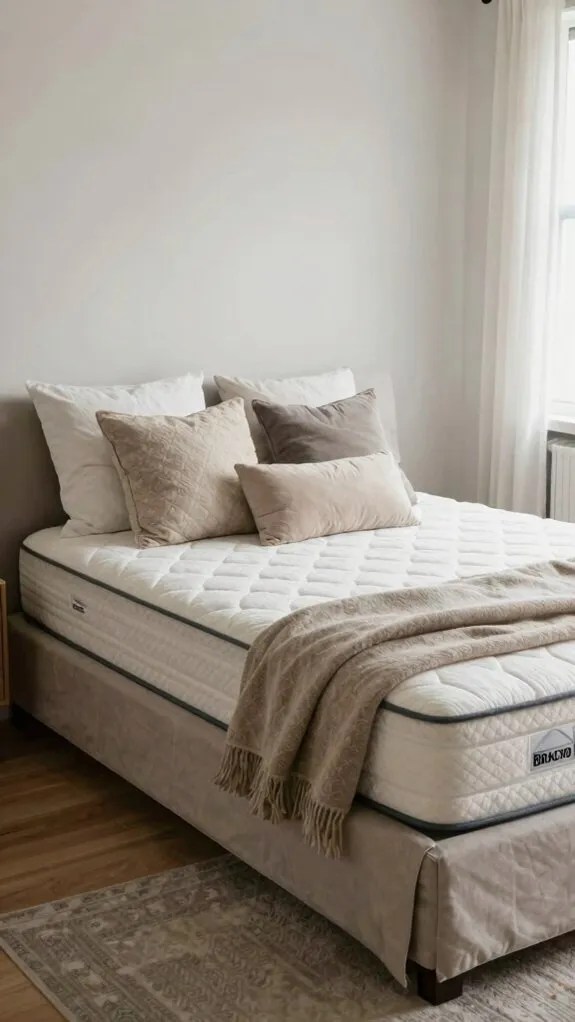
While transforming a bed into a couch feels straightforward, I’ve watched plenty of DIYers skip critical structural steps that turn their vision into a wobbly, uncomfortable mess.
Structural slip-ups that sink your setup
Here are three mistakes I see constantly:
- Ignoring seat support, Removing the sleeper mechanism without reinforcing the base leads to sagging within weeks. Your bed frame needs cross-slats or plywood to prevent that dreaded “hammock” effect.
- Cheaping out on cushions, Low-density foam collapses fast. I always recommend high-density foam with quality batting; otherwise you’ll sink through to the bed frame, creating a lumpy, unsittable surface.
- Forgetting the backrest, Leaning cushions against walls shifts constantly. Build or buy proper back support so your seating stays stable during movie nights.
Skip these, and you’ll enjoy a genuinely comfortable couch conversion.
Frequently asked questions about bed couches

How exactly does a bed-to-couch conversion hold up for daily use? I’ve found it works beautifully when you reinforce the base properly and upgrade those bed cushions with high-density foam.
Will my converted sofa bed feel like a real couch?
Absolutely, if you follow the steps. Removing the sleeper mechanism and adding plywood or webbing creates that firm, fixed-seat feel you’re after.
Do I need professional help?
Not necessarily. Most conversions are DIY-friendly with basic tools.
How long does it take?
Plan a weekend. The seat support evaluation and reupholstering take the most time.
What about the mattress?
Choose medium firmness, moderate thickness—this balances lounging comfort with a polished appearance.
Any final tips?
Use bed skirts to hide legs and add bolster pillows. These finishing touches transform your sofa beds into convincing, cozy seating you’ll actually want to use daily.
Frequently Asked Questions
What Is the 2 2 1 Rule Sofa?
I don’t recognize a standard “2-2-1 rule” for sofas, and my research doesn’t support this as common terminology. It might be a specific brand’s guideline or perhaps you’re thinking of a different configuration. Could you clarify where you encountered this term?
What Is the 2/3 Rule for Couches?
I apply the 2/3 rule by making my couch’s seating surface about two-thirds of its total length, which creates balanced proportions and ensures enough room for comfortable sitting without overcrowding cushions or armrests.
What Is a Ghost Sofa?
I’d describe a ghost sofa as a bed I’ve disguised to look like a couch, slipcovers, bolster pillows as arms, and a bed skirt hide the mattress while keeping the frame partially visible underneath.
How to Convert a Sofa Bed Into a Couch?
Like Frankenstein reanimating his creation, I transform my sofa bed by gutting the sleeper mechanism, reinforcing the frame with fresh webbing, draping it in a tailored skirt, and crowning it with bolsters, voilà, a couch reborn.
In Conclusion
You’ve now got everything you need to transform that lonely bed into a welcoming couch that pulls double duty in your space. Think of it like tailoring a suit—small adjustments in placement, layers, and styling create a piece that fits your room perfectly. With these steps, you’re not just saving square footage; you’re crafting a cozy nook where afternoon naps and evening conversations feel equally at home.
