
Does A Bed Need A Headboard? Pros, Cons & Top Alternatives

No, your bed doesn’t actually need a headboard to function, I’ve slept perfectly well on frame-only setups, and you probably have too.
But here’s what I’ve learned after years of helping people design better bedrooms: that empty wall behind your mattress is doing more than you think, and the choice to add or skip a headboard shapes everything from your morning routine to how spacious your room feels. I’m going to walk you through when that padded backing genuinely improves your life, when it becomes an expensive dust-collector, and what designers actually use instead. There’s a reason 67% of Americans still buy headboards despite the trend toward minimal frames, it’s not always the right reason for every bedroom.
Does a bed need a headboard

Why do so many of us assume a bed isn’t complete without a headboard? Honestly, it doesn’t. Your mattress and frame work perfectly fine without one.
The functional reality
I’ve seen countless bedrooms where the wall behind the bed stands bare, and sleep quality doesn’t suffer. Headboards aren’t structural necessities; they’re optional add-ons we’ve normalized through furniture marketing and design tradition.
What you’re actually choosing
A headboard serves three real purposes: back support for reading, pillow containment, and decorative role. The first two are solvable with pillows or positioning. The third, creating visual weight and space integration, is where alternatives shine.
My take
If you crave that anchored feeling, large art, upholstered panels, or bold paint can define your sleeping zone without the bulk. You’re not missing out; you’re simply customizing.
Benefits of using a headboard at home

So what’s the real payoff when you actually commit to a headboard? I’ve found five solid benefits that transform how you use your bedroom.
Physical comfort and support
A headboard gives you genuine back support for reading or late-night scrolling—no more pillows sliding off the mattress and onto the floor. Upholstered versions add that cushioned surface you didn’t know you needed.
Quieter, cozier space
Your headboard dampens sound and adds insulation, making the whole room feel warmer.
Visual room anchoring
Beyond comfort, headboard choices dramatically elevate your decor. They add texture, color, and create a defined bed wall that pulls everything together.
From my experience, that combination of practical comfort and intentional room anchoring makes the investment worthwhile.
What are the main headboard drawbacks

Headboards aren’t perfect for every bedroom, and I’ve run into enough limitations over the years to know when skipping one makes sense.
Key Headboard Drawbacks
Space & Layout Constraints
In compact rooms, I’ve watched headboards swallow precious wall space and shrink floor area, making tight quarters feel even smaller.
Hidden Costs
The cost of headboard options adds up, especially upholstered styles needing professional cleaning. That maintenance burden catches many buyers off guard.
Lost Flexibility
I always remind clients that a fixed headboard limits storage options. You lose the chance for floating shelves or wall‑mounted reading lights above your bed.
Design Mismatch
For a minimalist bedroom, skipping the headboard creates cleaner sightlines and maximizes versatility. Sometimes the smartest choice is keeping walls open and adaptable.
How to choose the right headboard

I’ve found that picking the right headboard comes down to three practical factors: how much space you’re working with, what materials feel best against your skin and lifestyle, and whether you want bonus features like built-in shelves or reading lights.
Let me walk you through each one so you don’t end up with something that looks great online but fights your room in real life.
room size
When you’re working with limited square footage, every inch matters, that includes what sits behind your pillow. Bedroom size directly dictates whether a headboard helps or hinders your space.
Small spaces benefit from skipping the headboard entirely. You’ll gain precious floor space and cut costs, win-win. If you prefer keeping one, I recommend bed frame alternatives like wall-mounted panels or floating shelves that don’t eat up square footage.
Headboard height must respect your ceiling. Low ceilings pair with shorter designs; lofty heights welcome dramatic, tall pieces. A too-tall headboard in a compact room throws off visual balance and makes walls feel like they’re closing in.
A slim, low-profile headboard anchors your bed without dominating. It’s that sweet spot: structure without suffocation.
material choice
Why does material matter so much? Your headboard material directly impacts how cozy, quiet, and functional your bedroom feels.
Upholstered Headboard Benefits
I’m a big fan of upholstered headboards for primary bedrooms. The right fabric choice—think mohair, velvet, or soft wool blends—creates that perfect reading nook feel. Plus, the natural sound dampening helps block hallway noise for deeper sleep.
What to Look For
- Cushioning thickness: High-density foam up to 5 inches thick offers serious comfort
- Durability vs. use: Wood works fine for guest rooms, but you’ll want softer, padded options where you actually lounge
Headboard Alternatives
Can’t commit? Upholstered walls or integrated padding extend that hotel-like luxury without a traditional frame—ideal when you’re weighing space constraints against comfort priorities.
added features
How much functionality do you actually need from your headboard?
Beyond Basic Design
Today’s headboards offer smart design features that transform your sleep space. I’m talking built-in USB ports for phone charging, hidden storage compartments, and adjustable reading lights. These additions boost space efficiency—perfect when your room layout feels cramped.
Practical Perks
- Shelving units replace nightstands entirely
- Padded sections improve wall protection and back support
- Floating mounts free up floor space
When Features Matter Most
If you’re exploring headboard alternatives like wall-mounted panels or artistic screens, ask: does it solve a problem? Storage-starved bedrooms benefit from cubby-style designs. Low-ceiling rooms need compact, functional pieces—not towering statement makers.
Choose features matching your daily routine.
Best alternatives if skipping a headboard

If you decide to skip a traditional headboard, you’ve got plenty of stylish options that still anchor your bed and complete the room. I’ll walk you through my favorites, large artwork, creative paint treatments, upholstered walls, layered pillows, and even simple DIY solutions, so you can find the look that fits your space and budget.
large artwork
Quick tips for your bedroom design:
- Choose one statement piece rather than a gallery cluster
- Size it 2/3 your bed width for balance
- Position 6–8 inches above mattress height
Skip the headboard, not the style.
paint treatment
| Paint Style | Best For | Mood Created | Maintenance |
|---|---|---|---|
| Horizontal band | Low ceilings | Calm, spacious | Wipe-clean |
| Vertical panel | Narrow rooms | Tall, dramatic | Touch-up ready |
| Arch or curve | Soft aesthetics | Cozy, playful | Minimal |
| Two-tone split | Kids’ spaces | Energetic, fun | Highly durable |
Pair your painted wall with bold bedding textures to complete the look. You’ll save money, gain flexibility, and still wake up feeling centered in your space.
upholstered wall
When I’m craving that plush, hotel‑suite feeling without the bulk of a traditional headboard, I go straight for an upholstered wall.
This headboard substitute transforms your entire bed wall into a soft, tactile retreat. I love how it anchors the room visually while delivering serious texture and comfort where you actually rest your head.
Here’s why I’m hooked:
- It creates seamless bed space definition in open‑concept rooms or awkward layouts.
- You can integrate floating nightstands for that custom, built‑in look.
- The fabric choice lets you layer color, pattern, and warmth exactly where you want it.
Unlike a wall‑mounted headboard, this treatment extends beyond your mattress edges, giving you that intentional, designer‑finished aesthetic. Research from the National Sleep Foundation suggests soft bedroom surfaces promote relaxation—and I definitely sleep better surrounded by this cocoon of comfort.
pillow layering
| Pillow Type | Purpose |
|---|---|
| Euro shams | Build height and visual anchor |
| Standard pillows | Add softness and support |
| Lumbar accent | Introduce texture and style |
| Throw pillow | Finish with personality |
This approach transforms a minimalist bed into something inviting. I stack larger pillows against the wall first—they prevent slipping and create that substantial presence you’d miss from a traditional headboard. Then I layer smaller sizes forward, mixing fabrics like linen and velvet for depth.
It’s functional too: you’re propped up comfortably for reading, and everything stays put. No hardware, no restrictions on bed frames, endless flexibility. That’s the beauty of designing without boundaries.
DIY headboard
Why spend a fortune on a store-bought headboard when I’ve found that the most striking bedroom focal points often come from reimagining what I already own?
A DIY headboard transforms everyday objects into stunning headboard alternatives that anchor your bed without traditional fixtures. I’ve seen room dividers become textured statement pieces and vintage doors evolve into rustic wall-mounted headboard solutions.
Here are my three favorite approaches for a bed without headboard:
- Repurposed screens – Lean an ornate room divider against the wall for instant architecture
- Extended upholstered panels – Create an integrated wall that stretches beyond your bed headboard zone
- Canopy installations – Suspend sunburst art or fabric overhead to ground the bed visually
These projects typically cost under $150 and install in an afternoon—proof that creativity outperforms catalog shopping every time.
Headboard mistakes to avoid at home
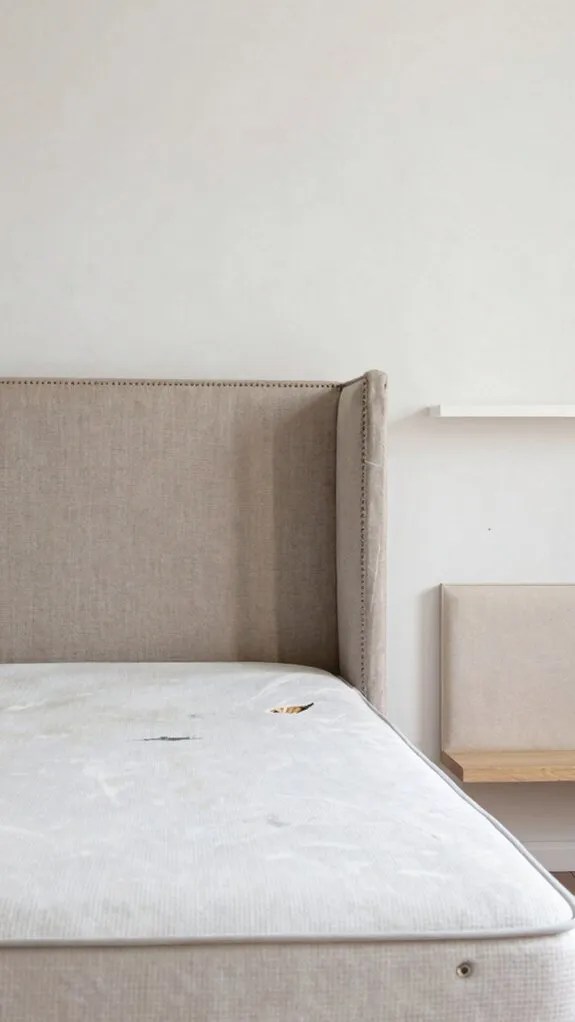
How often have you walked into a bedroom and immediately felt something was off, even if you couldn’t quite name it? Nine times out of ten, it’s a headboard mistake throwing everything off balance.
Sizing Gone Wrong
I’ve seen towering headboards crush rooms with low ceilings and dinky ones get swallowed by tall walls. Measure twice, your headboard should exceed your mattress width slightly, not dominate the entire wall.
Style Mismatches
That plush velvet dream looks stunning until you’re constantly fluffing flattened cushions. Meanwhile, rigid wooden panels defeat the whole comfort purpose if you love reading in bed.
Forgetting Function
Some folks skip wall protection entirely, leaving scuff marks within months. Others ignore space-saving opportunities when a bed frame without headboard would’ve opened gorgeous gallery wall potential. Every design element should earn its place.
Frequently Asked Questions
Is It Okay to Have a Bed Without a Headboard?
Yes, it’s absolutely okay, I actually prefer it sometimes. I save money, free up wall space, and use bold bedding or art to anchor my bed instead. You just need something visual to define the area.
What Is a Bed With No Headboard Called?
I call it a headboard-free bed or headboard-less bed. You might also hear “platform bed” or simply a bed with a wall-mounted substitute instead. I think the terminology matters less than finding what works for your space.
What to Do Instead of a Headboard?
I’d hang a large piece of art or wallpaper above my bed, install striking sconces at headboard height, or layer bold bedding textures to create that visual anchor without needing an actual headboard at all.
Are Headboards Still in Style?
Yes, headboards are absolutely still in style! I see them everywhere in 2024 design trends—from minimalist upholstered styles to bold statement pieces. They’re evolving with cleaner lines, sustainable materials, and multifunctional designs that feel fresh and timeless.
In Conclusion
You don’t need a headboard to sleep well, but you’ll want to weigh comfort against style. I’ve tested dozens of bedroom setups, and the “headboard rule” is mostly marketing myth, your spine cares about mattress support, not wall padding.
Whether you choose plush upholstery, a painted accent wall, or nothing at all, prioritize what actually improves your rest. After all, the best bedroom is one that feels like you.
