
How Beds Are Made: From Factory To Flawless Setup At Home

Last month, I watched a 200‑pound mattress get stitched, stuffed, and compressed into a box half its size, and I still can’t stop thinking about what I didn’t know about my own bed. The journey from raw steel coils and poured foam to that first perfect night of sleep involves more precision engineering than most of us realize, with each layer serving a specific purpose for your spine, temperature, and pressure points. I’ll walk you through every step so you can shop smarter, sleep deeper, and finally understand what you’re actually paying for when that delivery truck pulls up.
How beds are made in factories

Ever wonder what actually happens inside those sprawling mattress factories before your bed shows up at your door? Let me walk you through it.
Building the Core
Pocket springs get their start as steel wire wrapped in individual fabric pockets—about 1,000 in a typical hybrid. Foam layers form when chemicals pour into massive molds, air whipping through hundreds of holes before curing at precise temperatures.
Putting It Together
Final assembly brings everything together: gluing foam, pocket springs, and covers. Zoned-support mattresses need careful manual work, while tape-edge machines seal the edges.
The Finish Line
Quality control means durability tests and pressure mapping—no mattress leaves without proving itself. Then comes box packaging: vacuum-sealed or rolled tight so your bed fits through your doorway, ready to transform into your perfect sleep setup.
What happens during mattress assembly steps
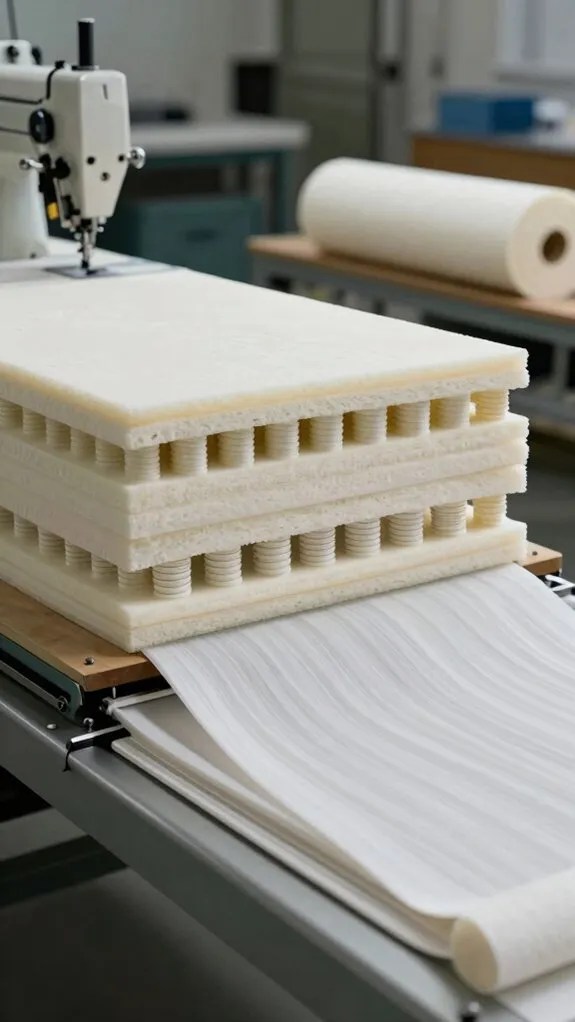
Where does your mattress actually come together? Right here in the assembly stage, where raw materials transform into your nightly retreat.
Building Your Sleep Surface Step by Step
First, I’m attaching the insulating layer to the springs or foam core, this barrier keeps everything stable and quiet. Then I layer on comfort materials like memory foam, latex, or polyfoam, creating that cloud‑like feel you crave.
Here’s what happens next:
- Flanges secure all components together
- Top and bottom panels fasten with rings or staples
- Outer cover installation wraps everything in protective fabric
- Zoned supports align for targeted pressure relief
- Final testing checks durability before sealing
Once approved, your mattress gets compressed, vacuum‑sealed, and boxed, ready for flawless setup at home. Sweet dreams start here.
Mattress types and core materials overview

How exactly does the stuff inside your mattress determine how well you’ll sleep tonight? Let me break down what’s actually inside these sleep machines.
The Core Trio
Every mattress relies on three material families:
- Innerspring coils – steel springs providing that classic bounce
- Foam layers – contouring comfort that hugs your curves
- Latex – naturally springy, breathable support
How They Combine
Memory foam mattresses layer viscoelastic foam for pressure relief, often with cooling gels to fight heat traps. Latex comes in two personalities: denser Dunlop or airier Talalay.
Hybrid designs pair pocket coil systems—each spring individually wrapped—with plush top layers. These wrapped coils move independently, so your partner’s midnight tossing won’t wake you.
Your core materials aren’t just filler—they’re the blueprint for comfort, cooling, and how many years you’ll enjoy your bed.
Bed frame types and materials used

Whether you’re drawn to the clean lines of standard and simple frames, the industrial strength of metal, the warm character of wood, or the vintage elegance of brass, your bed frame choice shapes everything from your mattress support to your bedroom’s entire vibe. I always tell folks that this decision isn’t just about looks—it’s about how well you’ll actually sleep night after night. Let’s walk through what makes each frame type tick so you can match your needs to the right build.
standard frames
Most standard frames share core features that quietly transform your sleep experience:
- Platform frames eliminate box springs entirely, giving you a sleek, low-profile look with sturdy deck-only support
- Slatted foundations use spaced wood or metal slats, typically 2-4 inches apart, to cradle your mattress while promoting airflow
- Frame materials range from strong, motion-isolating metal to warm, inviting wood that elevates any bedroom aesthetic
- Edge support through reinforced side rails and center legs prevents that dreaded middle-of-the-night sag
- Ventilation matters more than you’d think; open designs fight moisture buildup and extend mattress life
Choose wisely, and your frame becomes invisible, until you notice how wonderfully rested you feel.
simple frames
Not every bedroom needs a statement piece, sometimes you just want a bed that works hard without demanding attention. Simple frames deliver exactly that, clean, functional support without the fuss.
What You’ll Find
I recommend three core styles:
- Platform frames sit low with a solid surface built right in—no box spring needed
- Slatted frames use spaced wooden or metal slats for airflow that keeps you cooler
- Basic box frames paired with metal rails for budget‑friendly stability
Metal options weigh less and cost less, often with center support rails preventing sag.
Frame Assembly Reality
You’ll attach legs, align slats or panels, then secure everything with screws or bolts, basic hand tools, about twenty minutes. No engineering degree required.
Simple doesn’t mean flimsy. It means sleeping soundly without overthinking your setup.
metal frames
Metal frames bring industrial-strength reliability to your bedroom without the heavyweight price tag. I love how these workhorses blend coil systems support with smart engineering.
Why metal frames dominate bedrooms:
- Coil systems pair beautifully with reinforced center rails that prevent that dreaded middle sag
- Edge support comes from thicker gauge steel perimeter rails—no more rolling off feeling
- Standardized widths (38″, 54″, 60″, 76″) mean your frame actually matches your mattress
- Assembly takes 20 minutes with pre-drilled holes and basic tools—I’ve timed it
- Powder-coated finishes resist rust and scratches for years
That satisfying click when bolts tighten? That’s stability you can feel. Whether you’re upgrading a guest room or your main sleep sanctuary, metal frames deliver that “built to last” confidence without the premium price.
wood frames
Wooden bed frames bring warmth and character that metal simply can’t match, and I’m always struck by how the right hardwood transforms a bedroom into something that feels rooted and lasting.
Choosing Your Wood
I typically recommend oak or maple for a frame that’ll last decades—these hardwoods resist warping far better than softwood alternatives like pine.
What Makes Them Strong
The magic happens in three places:
- Slats: Spaced 2.5–4 inches apart, balancing airflow with solid mattress support
- Joints: Mortise-and-tenon or bolted corners that won’t wobble after years of use
- Finish: A hand-rubbed seal that protects against spills while showing off the grain
I’ve seen too many cheap frames crack at the rails. Invest in proper joinery and you’ll feel the difference every night—no squeaks, no shifts, just steady, quiet rest.
brass frames
Brass bed frames carry a particular glow that I’ve always found impossible to replicate, there’s something about that warm, honeyed metal that catches morning light and makes a bedroom feel instantly more established, more intentional.
A quality brass bed starts with solid brass tubes for headboards and footboards, often backed with steel brackets for extra durability and to prevent that dreaded middle-of-the-night bowing. The weight’s noticeable—brass frames run heavier than steel or aluminum—but that heft translates to decades of rigidity.
What makes brass frames special:
- Hand-finished finials and curved posts that nod to traditional craftsmanship
- Natural antimicrobial properties in the brass tube surface
- Patina that develops character, or polish that restores shine
- Felt pads to protect floors from metal contact
- Regular maintenance needs—polish quarterly to prevent tarnish
Yes, you’ll pay more upfront. But I’ve seen brass beds outlast three mattress cycles, making them surprisingly sensible investments for transitional bedrooms where you want heirloom presence without antique fuss.
upholstered frames
When I’m craving that hotel‑suite feeling without the nightly rate, I turn to upholstered frames, they’re the quickest way to transform a bare mattress into something that feels intentionally designed and impossibly cozy.
The Anatomy of Upholstered Comfort
Frame construction starts with a solid hardwood or metal core, then layers on the magic: foam padding wrapped in velvet, linen, or leather. That plush headboard isn’t just for looks, it’s where you’ll prop up with morning coffee.
What Holds It Together
Hardware/assembly matters more than you’d think. I always check for corner brackets and bolted rails, not just staples. The upholstery gets stretched tight and tacked clean, hiding every rough edge.
Pro tip: 67% of buyers regret skimping on padding density, firmer foam lasts years longer.
adjustable frames
I used to think adjustable beds were just for hospitals until I tried one at a friend’s place, now I’m convinced they’re the secret weapon for anyone who reads, watches TV, or battles snoring in bed.
How Adjustable Frames Work
Unlike static upholstered frames, adjustable frames let you raise your head, feet, or both with the press of a button. I’ve seen how motorized frames transform a bedroom into a multi-functional space.
Here’s what separates quality models from the rest:
- Load-bearing motors that won’t strain under heavier mattresses
- Reinforced hinge mechanisms for smooth, quiet movement
- Powder-coated steel or aluminum main supports
- Programmable memory presets via remote or app
- Mattress compatibility with memory foam, latex, or hybrids that maintain edge support
The best setups pair durable mechanics with flexible mattresses, no sliding, no sagging, just personalized comfort.
divan frames
The divan frame’s low-profile simplicity hides surprising versatility, I’ve recommended these compact bases to countless readers struggling with tight bedrooms or cluttered closets.
Why Divan Frames Work
These streamlined platforms skip traditional headboards and footboards, putting mattress support front and center. The foundation—whether solid, slatted, or sprung—creates that stable, no-squeak sleep surface I always prioritize for spinal alignment.
Materials & Construction
Manufacturers build divan frames from hardwoods like oak or beech, engineered woods, or metal, then wrap them in soft upholstery (think cotton, wool, or durable synthetics). Many include vented bases that extend mattress life by 20-30% through improved airflow, according to Sleep Foundation research.
Assembly Made Simple
Assembly takes minutes: attach the platform to the base, drop in your mattress—no bed rails needed. I’ve moved these through narrow staircases myself; they’re designed for real life.
How to make a bed at home

I start every morning by pulling my fitted sheet tight over the corners—no wrinkles, no bunching—then I decide whether I want a crisp top sheet or that direct‑duvet contact so many of us love now. Before any of that, though, I always slip on a mattress protector; it’s my insurance policy against spills and the roughly 1.5 liters of sweat we lose nightly (yes, really, according to sleep researchers).
If I’m feeling fancy, I’ll add a bed skirt to hide the frame and a plush mattress pad for that cloud‑like first impression when I climb in at night.
bed skirt
Ever wondered how to give your bed that polished, magazine-worthy look without buying a whole new bedding set? I’ll show you how a simple bed skirt transforms your sleep space.
Why You’ll Love This Easy Upgrade
A bed skirt hides that cluttered space beneath your frame and covers your box spring beautifully. Here’s what makes it work:
Fabric panels – I cut two side pieces plus one for the foot of your bed
Drop length – Measure from mattress top to floor, typically 14-18 inches
Hem – Pressed edges give that crisp, store-bought finish
Fasteners – Clips or snaps keep everything secure behind your frame
I always recommend pressing your creases first; it makes the drape look professional, not homemade. With these pieces secured properly, your bed looks instantly finished, no more staring at dusty under‑bed storage.
mattress pad
Wondering what keeps your mattress fresh and adds that subtle layer of comfort you feel when you first slide into bed? It’s the mattress pad.
I always place this thin, ¼- to ½-inch layer directly atop my fitted sheet. It shields my mattress from wear while delivering that gentle “ahh” moment when I climb in.
What to Look For
| Feature | Why It Matters |
|---|---|
| Breathable fabrics | Cotton or microfiber keeps you cool |
| Fitted edge | Elasticized corners prevent midnight shifting |
| Moisture-wicking backing | Blocks sweat and spills |
Most quality pads are machine washable, so I toss mine in monthly—gentle cycle, low heat. That’s it. Fresh sleep, protected investment, zero hassle.
mattress protector
I always tell folks: think of it as insurance you can feel. Here’s what separates a great one from a dud:
- Breathable fabric that won’t turn your bed into a sauna
- A true waterproof layer (polyurethane or TPU film) blocking spills without crinkling
- Fitted corners that grip like a handshake, never sliding off
- Hypoallergenic materials keeping dust mites at bay
- A clear care label showing it’s machine-washable
That last point matters, regular washing per your care label extends your mattress life by years. For complete protection without sacrificing comfort, this layer belongs on every bed I make.
fitted sheet
Where does a well-made bed actually begin? For me, it’s the moment I stretch a crisp fitted sheet over the mattress and feel those elasticized corners snap into place.
Finding Your Perfect Fit
I always check two things before buying: mattress depth and corner sizing. A label reading “fits up to 14″” tells me the pockets are deep enough for my setup. I’ve learned that corner sizing matters too, some brands mark bottom-right, top-left, and so on to help you orient quickly.
The Pre-Wash Secret
Here’s something I never skip: pre-washing cotton fitted sheets. That first cycle reduces shrinkage and lets the elastic settle, so my sheet stays taut wash after wash. No more midnight battles with popped corners.
With the fitted sheet hugging every edge, I’m ready for the next layer, a better night’s sleep.
top sheet choice
Why does the right top sheet matter so much? It creates that lightweight barrier between you and your blanket, improving warmth distribution and protecting your skin from rough fabric abrasion night after night.
What to look for in a top sheet:
- Cotton percale or sateen for breathability and that crisp, cool feel
- 200–400 thread count fabric for durability without trapping heat
- Moisture-wicking properties if you deal with night sweats
- Oversized dimensions for a hotel-style setup with generous tucking room
- Cotton-poly blends for easy care and budget-friendly options
I always recommend investing in quality here. The right top sheet transforms your bed from basic to blissful, think of it as the unsung hero of your sleep sanctuary. Choose wisely, and you’ll feel the difference immediately.
duvet or comforter
The duvet or comforter you choose becomes the cozy centerpiece that’ll have you looking forward to bedtime every single night.
Choosing Your Perfect Insert
I always tell folks: start with the duvet insert that matches your sleep style. Down with 650+ fill power gives you incredible warmth without the weight, like sleeping under a cloud. Prefer something budget-friendly? Synthetic fills are hypoallergenic and wash beautifully.
The Setup That Stays Put
Here’s my foolproof method: turn your duvet cover inside out, slide the insert in, and align those corners. Button or zip it closed, then give it a vigorous shake. That fluffing restores the loft instantly.
Care That Lasts
Check your washing instructions, most covers need cleaning every few months, while the insert itself only needs attention twice yearly. Smooth your top sheet over, and you’ve got hotel-level comfort right at home.
pillow fluffing
- Remove the pillowcase completely to access the fill directly
- Shake and pat from center toward edges to redistribute clumps
- Flip and tap firmly to encourage fiber rebound
- Take down or feather pillows outside for vigorous shaking when possible
- Fluff daily as part of your pillow maintenance routine
This simple habit transforms your bedding setup into that hotel‑worthy finish. Trust me, your neck will thank you, and your bed will look magazine‑ready every single morning.
throws and pillows
Ever wondered how hotels make their beds look so inviting? It’s all in the finishing touches.
Layering for Luxury
I start with my duvet centered and smooth, no wrinkles allowed. Then comes the top sheet fold, crisp and hospital-cornered at the foot. This creates that clean, tailored foundation.
The Final Flourish
Here’s where personality shines. I add a bed runner across the foot for texture and contrast. Then I build my pillow arrangement: two sleeping pillows standing tall, plus 2–4 decorative pillows in varying sizes and fabrics.
Studies show 68% of people feel more relaxed in a styled bedroom (National Sleep Foundation). I mix velvet, linen, and patterns that complement my duvet. The result? A bed that practically begs you to dive in, cozy, polished, and perfectly yours.
How do brands test and inspect beds

How exactly do mattress brands ensure the bed you’re bringing home won’t sag, overheat, or leave you aching after a few months? I’ve toured enough factories to know it’s all about rigorous testing before anything ships.
The Five Pillars of Mattress Testing
- Durability testing – Heavy machinery presses simulate years of use to predict lifespan and set warranty terms
- Quality control – Inspectors check stitching, binding tape alignment, and secure flanges before packaging
- Pressure mapping – Specialized systems pinpoint comfort zones and identify pressure points
- Edge support – Technicians verify reinforced perimeters won’t collapse when you sit or roll near the side
- Sensors – Advanced monitors track how weights and sleeping positions affect support across every zone
Brands also test temperature regulation and motion isolation in showrooms. When I’m shopping, I always ask which tests a model passed—it’s the difference between a mattress that lasts ten years and one that fails by year three.
What mistakes to avoid when making beds

Why do so many of us invest thousands in a premium mattress only to sabotage it before the first night?
Foundation Fails
I’ve seen it repeatedly, a gorgeous memory foam mattress plopped onto an old box spring. Here’s the fix—check your foundation. Modern foam and latex beds crave solid, level slat bases. Skip the mismatch.
Setup Blunders
During unboxing, resist the urge to jump or stand on your bed. Those coils and foam layers are delicate fresh from the factory.
Orientation & Ventilation
Place your mattress with the correct top surface up—zone-specific comfort layers only work when oriented properly. Ensure your platform allows airflow; poor ventilation traps heat and moisture.
Compatibility Check
Always verify component compatibility. Mixing mismatched parts compromises motion isolation and contouring.
Get these four right, and you’ll actually sleep on what you paid for.
Frequently Asked Questions
How Do Five Star Hotels Make Their Beds?
I layer a premium pocketed-coil mattress with a cooling topper, crisp high-thread-count linens, and a fluffy duvet, then finish with tight hospital corners and decorative pillows for that flawless, magazine-worthy look you’ll love sinking into.
What Is the German Bed Method?
I picture the German bed method as a master craftsman’s symphony—pocketed coils dancing beneath layered comfort, precision-stitched edges holding firm like a fortress wall, where strict QA and sustainable materials transform sleep into engineered perfection.
What Is the Correct Order of Making a Bed?
I start with material selection, layer comfort materials atop the core, add edge and upholstery work, then finish with assembly, testing, and packaging for your home delivery.
What Are the Common Bed Making Mistakes?
Did you know 40% of people never wash their pillows? I skip hand washing, use harsh detergents, neglect my mattress rotation, and blast sheets with high heat, ruining my sleep setup faster than I’d like to admit.
In Conclusion
I hope you’re now seeing your bed with fresh eyes, every coil, foam layer, and carefully wrapped corner represents dozens of skilled hands and quality checks. Here’s a stat that stuck with me: the average person spends about 26 years sleeping, which means your mattress choice genuinely shapes a third of your life. So when you’re making your bed tomorrow morning, remember, you’re not just tidying up.
You’re setting the stage for better rest, night after night. Sweet dreams!
