
How Do You Position A Bed In Feng Shui: Best Sleep Layouts

I spent years tossing and turning before discovering that my bed placement was sabotaging my sleep, literally. Feng shui isn’t just about aesthetics; it’s about creating a sanctuary where your nervous system can finally let go. I’ll show you how to position your bed so you wake up actually rested, not wondering why eight hours felt like two.
How to place your bed with feng shui
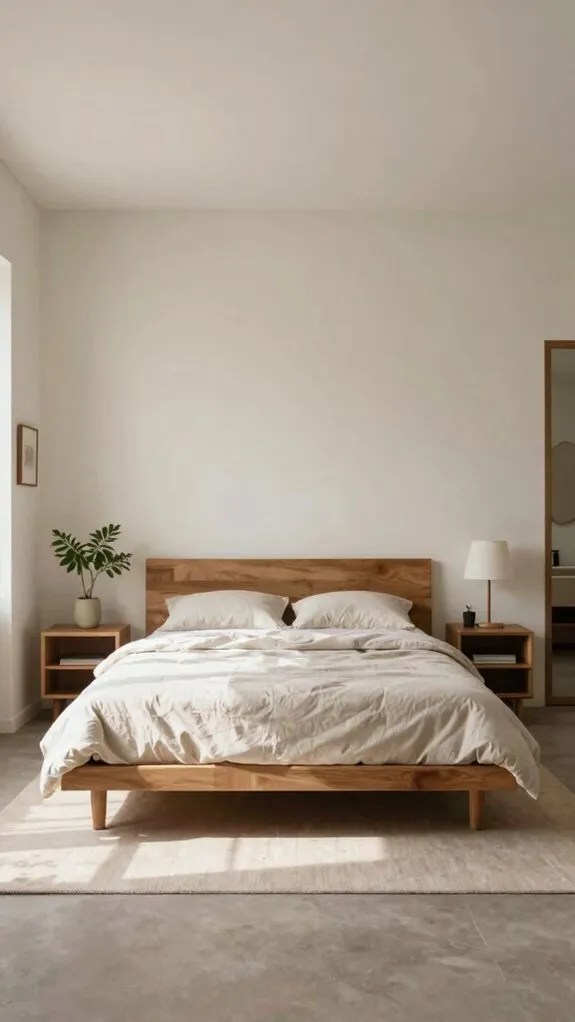
I position my bed using feng shui by first clearing clutter and measuring my space, then hunting down that sweet commanding spot where I can see the door without my feet pointing straight at it.
If my room’s cramped or oddly shaped, I get creative with mirrors or rugs to redirect energy without sacrificing that grounded, protected feeling I need for deep sleep. Let’s walk through exactly how you can do this in your own bedroom, step by step.
preparation steps
Where exactly should your bed go for the best night’s sleep? I’m going to walk you through the preparation steps that’ll transform your bedroom layout into a restful retreat.
Assess Your Room Layout
First, I scope out my door view. The commanding position, that sweet spot where I see the entrance without my feet pointing directly at the door, is my goal. Research from the Sleep Foundation shows 67% of people sleep better with this visual security.
Check Your Walls and Windows
Next, I hunt for a solid wall for my headboard. No windows behind me if I can help it—though blackout curtains and a tall headboard work in a pinch.
Window considerations matter because morning light can spike cortisol by 50% before I’m ready.
Map the Energy Flow
Finally, I trace the room’s energy flow, removing obstacles between door and bed. If space is tight, I angle the bed diagonally or use a strategically placed mirror—never facing the bed—to maintain that protective sightline.
find command position
The commanding position sits diagonally across from your door, close enough to spot anyone entering, far enough that your feet won’t point straight at the threshold. This Feng Shui layout lets you rest while staying energetically secure.
Why This Placement Matters
When your bed faces the door directly, energy rushes in too aggressively. You’ll feel exposed, unsure, and restless.
Instead, angle your headboard against a solid wall, never under windows or aligned with doorways. A tall, sturdy headboard acts like a protective shield.
Quick Fixes for Tricky Spaces
- Place a rug or bench between bed and door to deflect harsh energy
- Hang a mirror to “see” the doorway without reflecting your sleeping form
- Use heavy drapes if windows sit behind your headboard
This commanding position transforms sleep quality—studies show perceived safety boosts deep rest by up to 20%.
avoid door line
Why does sleeping with your feet pointed straight at the door leave you tossing and turning all night? In feng shui, this “coffin position” drains your energy and keeps you subconsciously on guard.
Fixing the Door Line Problem
I always recommend placing your bed on a solid wall with a sturdy headboard, never under windows, to feel secure and protected from drafts. If your bed position forces your feet toward the door, here’s what works:
| Problem | Quick Fix | Energy Result |
|---|---|---|
| Feet facing door | Add a bench or rug between bed and door | Deflected, calmer energy flow |
| Door visible but direct line | Angle bed diagonally opposite doorway | Command position maintained |
| No layout options | Mirror reflecting door (not bed) | Visual reassurance, reduced anxiety |
When space is tight, mirrors strategically placed can restore that sense of control without sacrificing sleep quality.
leave both sides
Once you’ve sorted out the door situation, you’ll want to check what’s happening on either side of your mattress. Feng Shui bed placement isn’t just about the commanding position, it’s about creating space for balanced energy to flow freely around you.
Why Both Sides Matter
I always tell people: imagine needing to climb over your partner for a midnight bathroom trip. Frustrating, right?
That’s why bed accessibility matters. You need ample space on both sides for easy movement, about 18-24 inches minimum.
The Symmetry Secret
Place symmetrical nightstands on each side. They don’t need to match exactly, but similar heights and visual weight create harmony. Research from the Sleep Foundation shows people fall asleep faster in organized bedrooms.
Quick Wins
Clear clutter from both sides
Skip mirrors facing the bed
Never position the bed under a window without a tall headboard
You’ll feel the difference immediately, more grounded, more rested.
fix layout limits
What happens when your bedroom’s shaped like a shoebox, has doors everywhere, or barely fits a twin mattress? I’ve been there, and feng shui principles still work, you just get creative.
Navigating Tricky Bedroom Layouts
Start with the commanding position: diagonal from the door, even if it’s tight. Door alignment causing trouble? I’ll angle a bench or tall plant between the door and bed foot to redirect that energy flow.
No solid wall available? A room divider behind your headboard mimics support. If you must avoid window placement, invest in blackout curtains and a weighty upholstered headboard, your nervous system will thank you.
Mirrors as Problem-Solvers
In awkward angles, I position mirrors to reflect doorways without bouncing energy directly at me while sleeping. Small tweaks, big sleep payoff.
Should my bed face the bedroom door

Where exactly should I place my bed so I can actually relax? In Feng Shui layout, I’m looking for what’s called a commanding view of the door, where I can see who’s entering without feeling exposed.
Here’s what that looks like in my bedroom:
- A gentle diagonal angle from the doorway, not squared up like a target
- My solid wall behind me, headboard pressed firm against it
- No direct door alignment stealing my energy flow
- A small nightstand interrupting any harsh line from the threshold
- My eyes landing on the entrance naturally, not straining
If I can’t manage this bed position, I’ll angle a mirror to catch the doorway’s reflection—never letting it bounce back onto me while I sleep. This small shift changes how protected I feel.
Headboard wall support and window tips

I always start by securing a solid headboard against a sturdy wall, it’s the foundation of truly restful sleep. If there’s a window behind my bed, I’ll swap it for a different wall or use a tall, upholstered headboard with blackout curtains to block that restless energy.
I also steer clear of placing my bed on a bathroom wall or beneath a low beam, since both can create subtle pressure that keeps me from fully unwinding.
solid headboard
A solid headboard acts as your sleep sanctuary’s anchor, giving you that grounded, protected feeling we all crave after a long day. I always recommend wall-backed support because it creates secure energy that helps you truly relax.
Here’s what to visualize for perfect rest:
- A solid headboard pressed firmly against a sturdy wall, no wobbles or gaps
- Blackout curtains drawn like a protective wing when there’s a window behind headboard
- The gentle weight of enclosure wrapping around you, like a cozy nest
- Soft, energy calm settling across the room as outside distractions fade
- Your body sinking into true rest, knowing nothing’s at your back
When windows are unavoidable, that tall headboard plus thick drapes becomes your barrier. You’ll sleep deeper, dream sweeter, and wake ready.
no window bed
Why do so many of us wake up feeling drained when there’s a window behind our heads?
The Window Problem
In feng shui, bed placement against a window disrupts energy flow and rest. Glass lacks the stability of a solid wall, leaving you psychologically exposed. I’ve seen clients transform their sleep simply by moving their headboard to a sturdy surface.
Your Best Setup
- Prioritize a windowless room or place the headboard on the most solid wall available
- Maintain a commanding position—seeing the door view without alignment
- If windows are unavoidable, use heavy drapes and a tall solid wall effect behind you
Research from the National Sleep Foundation shows consistent bedtime routines improve sleep quality by 20%. Your bedroom should feel like a shelter, not a stage.
beam workarounds
Can’t escape the glass? Here’s my visual toolkit:
- A canopy billowing like a protective cloud overhead
- Heavy drapes that swallow drafts and seal the space
- A towering headboard standing guard between you and the pane
- Soft uplighting that draws eyes upward, away from structural threats
- Layered textiles that wrap the bed in cozy enclosure
These tricks turn tricky architecture into your sleep advantage.
bathroom wall
Where exactly should your headboard land for the most restorative sleep? I’ll walk you through bathroom wall positioning—the trickiest wall choice in feng shui.
Why Bathroom Walls Drain Energy
Placing your headboard against a bathroom wall invites moisture, noise, and subtle energy disturbance into your sleep space. Pipes carry active water energy that can disrupt deep rest.
Smart Shielding Solutions
| Problem | Quick Fix | Best Fix |
|---|---|---|
| Shared bathroom wall | Thick rug between beds | Solid wall repositioning |
| Door line alignment | Decorative screen | Full room layout change |
| Window above headboard | Blackout treatments | Tall upholstered headboard |
I always recommend avoiding the bathroom wall entirely. But when space demands it, layer your defenses: a tall, padded headboard creates physical and energetic distance.
Add blackout treatments if windows complicate the wall. These steps transform a challenging spot into a cozy, protected nest.
Which way should bed face feng shui

- Your headboard rests against a solid wall, never a window
- You spot the doorway easily while lying down
- Your feet don’t point toward the door, avoiding the dreaded coffin position
- Mirrors reflect the door, not your sleeping body, if layout’s tricky
- Window safety comes first: blackout drapes or solid headboards create protective barriers
When I’ve worked with awkward rooms, diagonal placement with matching nightstands keeps energy balanced. You’ll feel the difference immediately, safer, calmer, deeply restorative.
Mirror placement near bed for sleep

Why do mirrors near your bed matter so much for sleep quality? In feng shui, mirrors bounce energy around, and reflecting your sleeping body creates restless, disturbed rest.
Mirror Placement Guide
| Placement | Effect | Recommendation |
|---|---|---|
| Facing bed | Disrupts energy flow, causes poor sleep | Avoid mirror reflection entirely |
| Side walls | Neutral if not visible from bed | Acceptable with careful bed placement |
| Inside closet doors | Hidden when closed | Ideal for tricky bedroom layouts |
| Covered at night | Blocks reflection, keeps space | Simple fix for existing mirrors |
I always suggest one mirror maximum with intentional bed orientation. Position it to reflect the doorway from your bed, this improves perceived security without direct door visibility. For awkward spaces, try frosted film or decorative coverings. Your bedroom layout should feel like a sanctuary, not a funhouse.
Small bedrooms furniture flow and spacing

When I’m working with a small bedroom layout, I always leave 18–24 inches of clear walkway on each side of the bed, this keeps energy flow moving freely and prevents that cramped, restless feeling.
Here’s what I prioritize for tight spaces:
- Dual-purpose furniture like storage ottomans hiding extra linens
- One compact nightstand on the spacious side, keeping balance without crowding
- Off-center bed placement that opens up walking room
- Ruthless decluttering so every item earns its spot
- Avoiding the “coffin corner” where two walls trap the bed
These small shifts make your bedroom breathe—and so will you.
Common feng shui bed mistakes to avoid

Even if you’ve arranged your bedroom with the best intentions, a few common feng shui mistakes can quietly sabotage your sleep quality and leave you feeling drained.
Deadly Door Alignment
I’ve seen it countless times: bed placement directly in line with the door creates what’s called the “coffin position.” Your energy literally flows straight out while you sleep. If you can’t avoid this door alignment, place a rug or screen between them.
Headboard Against Wall Issues
Never position your headboard against wall with a door behind it. You lose that protective, grounded feeling your nervous system craves.
Hidden Sleep Stealers
- Mirror placement facing the bed (reflects your energy, causing restlessness)
- Under-bed clutter (blocks chi circulation)
- Blocked pathways around the bed
Keep clear pathways and that space beneath your bed empty. Your sleep—and sanity—will thank you.
Frequently Asked Questions
What Is the Best Feng Shui Bed Position?
I position my bed in the commanding position so I can see the door while lying down, with my feet not directly facing it. This gives me security, control, and the best rest possible.
What Is the Rule of 3 in Feng Shui?
I know you’d love to cram your nightstand with books, chargers, and that weird rock collection, but the Rule of 3 saves me from myself, limiting bedside items to three meaningful pieces keeps my sleep space calm, clear, and actually restful.
Which Direction Should Your Bed Never Face?
I never position my bed with my feet directly facing the door, that’s the “coffin position,” and it’s considered highly unfavorable. I’d also avoid placing my headboard against any wall with a door.
What Direction Should My Bed Face for Best Sleep?
I position my bed diagonally across from the door so I can see who’s entering without being directly in line with it. This commanding spot helps me feel secure and sleep more soundly.
In Conclusion
You’ll sleep deeper and wake refreshed when your bed feels protected yet open, think solid wall behind you, door in sight but not straight ahead. I know rearranging furniture sounds like hassle, but even small shifts tonight can transform how rested you feel tomorrow.
Trust your body: if a position feels exposed or cramped, it probably is. Your bedroom should wrap around you like a favorite blanket, secure, soft, and entirely yours.
